
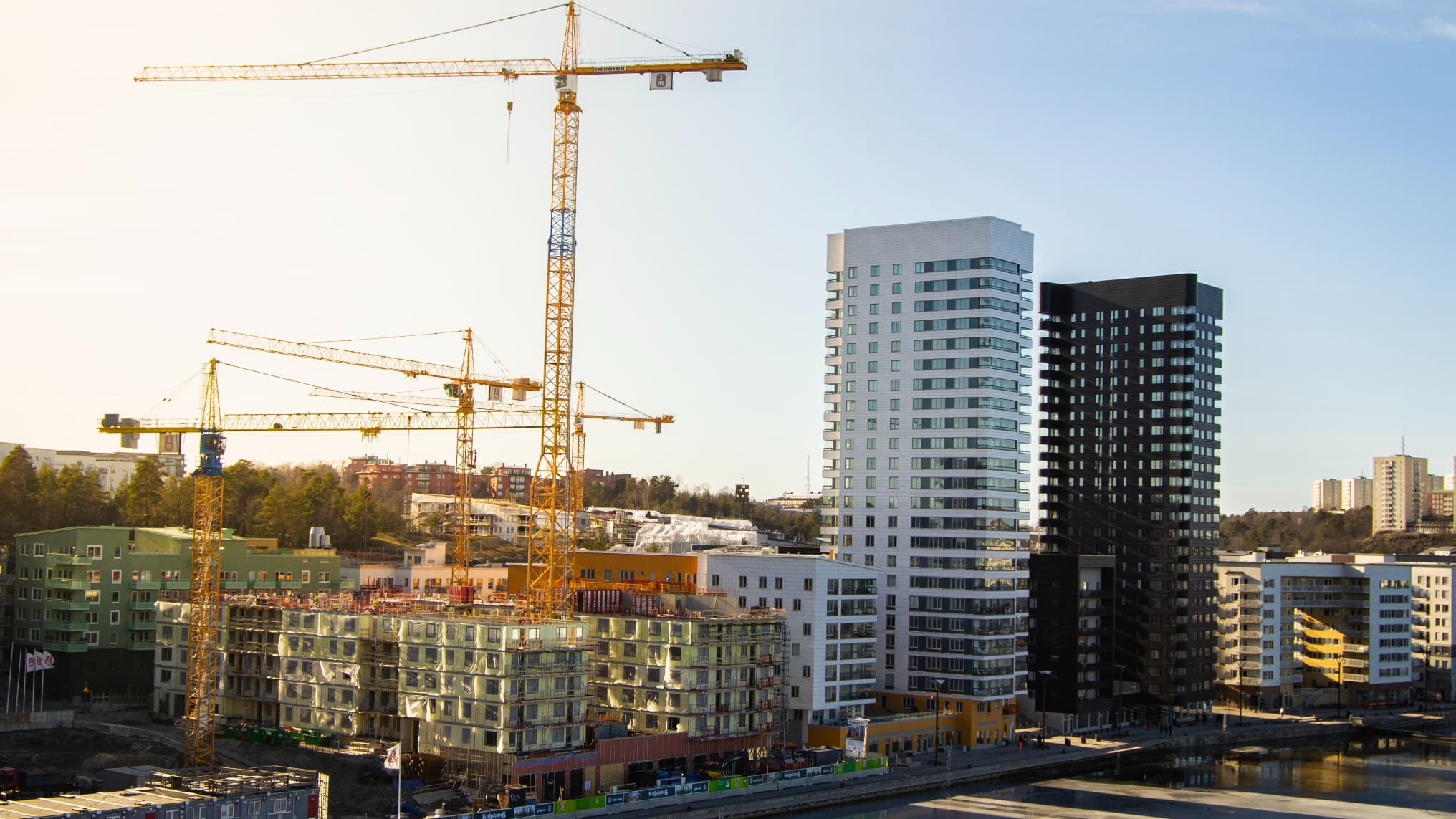
New home sales increased nearly 6% year over year, but remain at a very low level.
Reservations (i.e. sales) of new accommodation by private individuals have slightly increased in the third quarter, but remain at a very low level, according to statistics from the Ministry of Housing and Urban Renewal released on Tuesday, November 26.
Between July and September, almost 17,500 new homes were booked by private individuals, i.e. 4.6% more than in the previous quarter. In one year, bookings increased by 5.8%.
There is rebound phenomenon also observed by the Federation of Real Estate Developers, is mainly explained, according to its president Pascal Boulanger, by the desire to be able to benefit from the Pinel tax loophole for rental investors, before his disappearance on December 31st.
The increase in bookings concerns both apartments in collective housing (16,500, +4.7% compared to the previous quarter) and individual homes (800, +3.7%).
The supply is reduced
Builders marketed nearly 14,000 new or renovated homes between July and September, which was 6% fewer than the second quarter and 30% fewer than the third quarter of 2023, which was already seeing slowing activity. The level of new home sales is at its lowest level since at least the end of 2018.
The number of houses to be sold is progressively reduced taking into account this sales deficit: at the end of the third quarter 120,000 houses were offered for sale, i.e. 3.4% less than at the end of June and 9.7% less than at the end of June. at the end of September 2023.
Institutions (social owners, businesses, large investors) booked 14,300 accommodations, down 3.5% compared to the previous quarter.
Ministry statistics show a greater demand for small spaces than large apartments. Bookings for accommodations with more than four bedrooms are the only ones to decline slightly among the different apartment types, and developers are marketing less of these large accommodations.
From a geographical point of view, there is an increase in bookings in the most densely populated areas (A and B1), which are Paris, much of the Île-de-France, the Côte d’Azur as well as the border area with Switzerland and the large cities with more than 250,000 inhabitants. In the rest of the country, bookings are down by around 20%.