
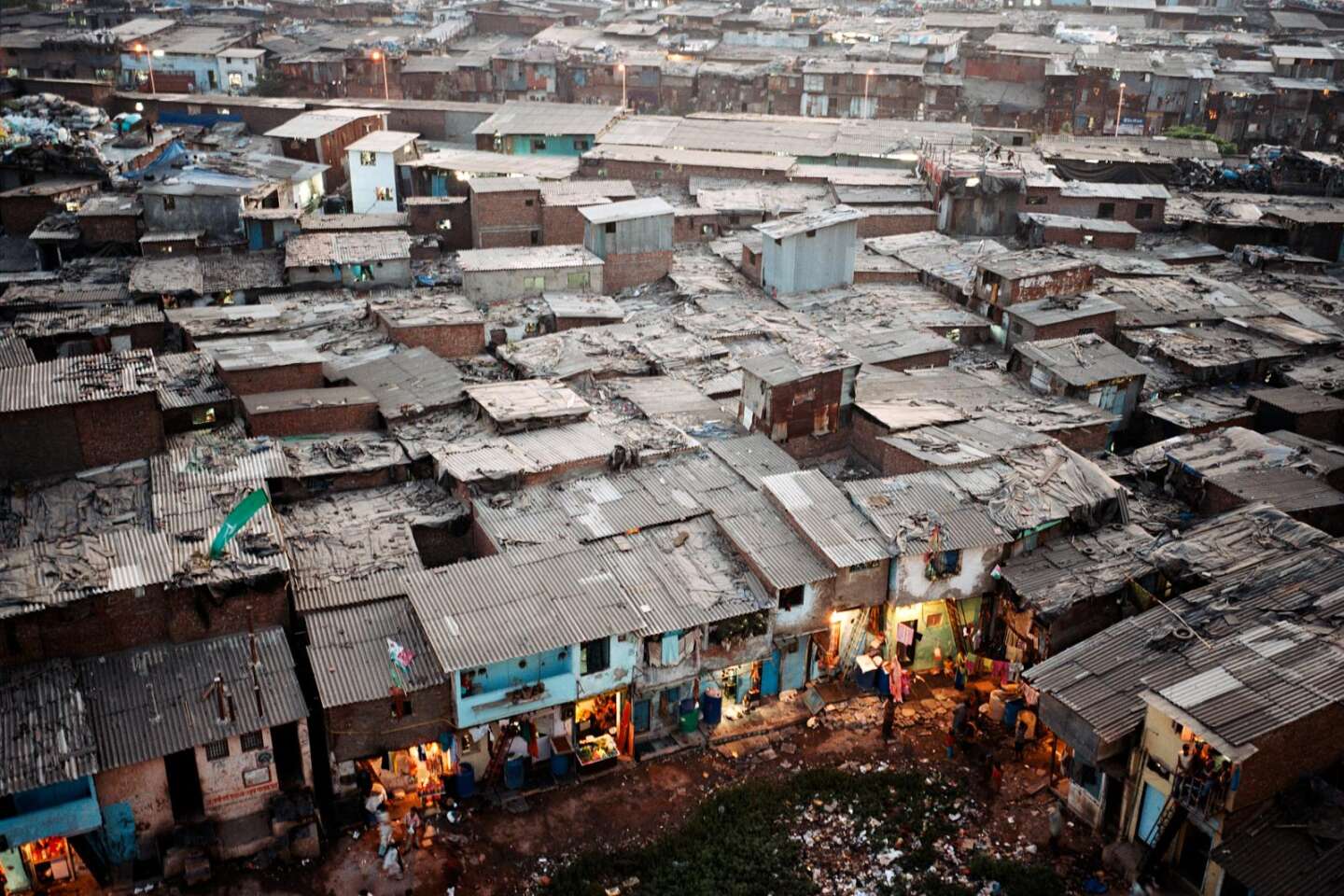
The name Bombay (Mumbai) commonly evokes, for the French public, the image of slums. The success of films like The Slumdog Millionaire (2008) fuels this imagination, through spectacular scenes that are supposed to take place in the district of Dharavi, considered the largest slum in Asia. Less known is the intense desire that Dharavi has been the object of for two decades by real estate developers and large capitalist groups close to the Hindu nationalist party in power in the country. Under the guise of “redevelopment” projects with mediocre names, these large groups are trying to monopolize this land ideally located in the heart of the peninsula.
This article is taken from “Le Monde Special Issue: Reinventing the City”September 2024, on sale at newsstands or on our store’s website.
Why real estate is a huge source of profits in Bombay. With the implementation of neoliberal economic policies in the early 1990s, the tertiary sector and especially financial capitalism developed significantly, leading to increased inequality within the urban population. This new influx of capital towards the most favored categories thus gave rise to strong real estate speculation.
In a few years, prices in the sector multiplied by five or six, leading Bombay to the rank of the most expensive metropolis in the world in 1996. The old low-rise buildings began to be demolished to make way for huge concrete and glass towers that housed luxury housing. This process profoundly changed the appearance of the city, as well as the environmental impact of its buildings, since these new buildings depend entirely on air conditioning during the hot season.
A legacy of colonial capitalism
At the same time, the most precarious populations continued to crowd into shanty towns. By the early 2000s, nearly half of the city’s inhabitants, or 5 to 6 million people, lived in these types of spaces that occupied 6% of the city’s surface.
Although accentuated by the implementation of neoliberal policies in the 1990s, this violent contrast is also the legacy of a longer history that is useful to recapture in order to reflect on current singularities. A site of minor settlements during the pre-colonial period, the city of Bombay really took off in the second half of the 19th century.And century, under the combined effect of the dynamism of its port, which became one of the main cogs of British colonial capitalism, and the development of a cotton textile industry financed mainly by Indian capital.